Empanada gallega near me is more than a search for a convenient meal; it can be an invitation to discover one of Galicia’s most recognizable culinary traditions. From its golden pastry to its generous savory filling, Galician empanada carries the character of northwestern Spain, where food has long been connected to family gatherings, coastal life, seasonal ingredients, and local identity. Today, the dish travels far beyond Galicia, appearing in bakeries, Spanish restaurants, specialty markets, and neighborhood kitchens where traditional recipes meet contemporary tastes.
Galicia on a Plate: The Story Behind the Empanada
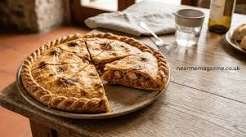
The Galician empanada has a long-standing place in the region’s food culture. Unlike individually folded pastries, it is commonly prepared as a larger baked pie that can be sliced and shared. Traditionally, fillings may include fish, seafood, meat, or vegetables, depending on local availability and family preference. Consequently, no single version tells the entire story. Instead, the dish reflects Galicia itself: practical, generous, ingredient-focused, and deeply connected to communal eating.
Why the Search for Empanada Gallega Near Me Feels Different
Searching for empanada gallega near me often begins with convenience, but the experience can quickly become cultural. A well-made empanada combines a crisp exterior with a flavorful filling that remains moist without overwhelming the pastry. Moreover, its appeal lies in balance rather than extravagance. The dough provides structure, while ingredients such as peppers, onions, tomatoes, tuna, sardines, or other seafood create layers of flavor. Therefore, finding an authentic preparation can feel like discovering a small culinary connection to Galicia.
The Ingredients That Give It Character
The filling is where individual interpretations become especially interesting. Seafood varieties may highlight tuna, sardines, cod, or shellfish, while meat-based versions can include pork or other regional combinations. Vegetable fillings, meanwhile, demonstrate how adaptable the dish can be.
The sofrito-style mixture of onions, peppers, and tomatoes is particularly important in many preparations. Slowly cooked vegetables create depth without requiring excessive seasoning. As a result, the final dish tastes substantial while remaining rooted in simple ingredients.
| Element | Traditional Role |
|---|---|
| Pastry | Provides a crisp, substantial outer layer |
| Onion and peppers | Add sweetness, aroma, and depth |
| Tomato or sofrito | Builds richness and moisture |
| Seafood or meat | Provides the central savory character |
| Olive oil | Connects the ingredients and supports the filling |
From Family Kitchens to Modern Food Scenes
Historically, dishes like empanada were practical because they could feed several people and travel well. That practicality helped make the food suitable for celebrations, gatherings, working days, and journeys. Over time, however, the dish moved into restaurants and commercial bakeries, where cooks began experimenting with fillings and presentation.
Even so, modernization does not necessarily erase tradition. Instead, contemporary chefs can reinterpret the basic structure while preserving its essential identity. A bakery might offer a classic seafood version alongside a vegetarian interpretation, for example. Thus, the empanada becomes both a culinary tradition and a living food.
What to Look for When Ordering One
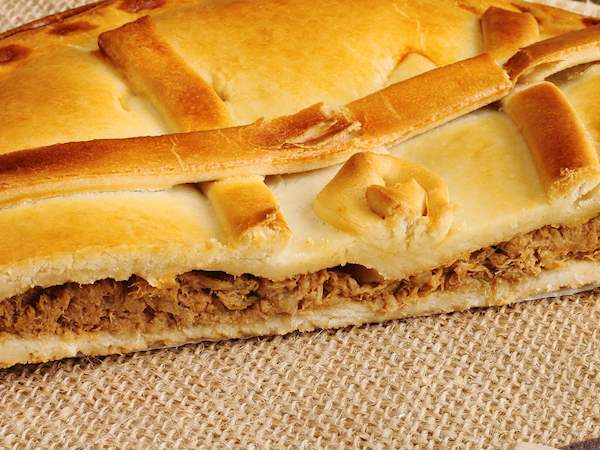
When exploring local options, appearance can provide an initial clue, although it should not be the only consideration. A good empanada generally has a pastry that is baked rather than excessively greasy, while the filling should taste integrated rather than simply placed inside the dough.
Furthermore, consider whether the establishment prepares its empanadas regularly. Freshly baked pastry can offer a noticeably different texture from a product that has been sitting for hours. Asking about the filling is also worthwhile, particularly when you want seafood, meat, or vegetable varieties.
The Human Side of a Shared Dish
Perhaps the most appealing quality of Galician empanada is its social character. It is naturally suited to sharing: a large baked preparation can be placed at the center of a table, cut into portions, and enjoyed without ceremony.
That quality matters because food traditions are rarely only about ingredients. They are also about memory. Someone who grew up eating empanada at family gatherings may associate its aroma with grandparents, celebrations, holidays, or Sunday meals. Meanwhile, someone encountering it for the first time can experience the dish simply as an enjoyable introduction to Galician culture.
A Small Culinary Journey Without Leaving the Neighborhood
For many diners, discovering empanada locally provides a different kind of food adventure. Rather than searching only for familiar fast-food choices, they encounter a dish with a distinct regional history. Moreover, the experience demonstrates how traditional foods survive by traveling.
A neighborhood bakery may not reproduce every detail of a Galician kitchen, yet it can still introduce diners to the combination of pastry, sofrito, seafood, and communal eating that defines the dish. In that sense, local food discovery becomes a form of cultural exploration.
Questions Worth Asking Before You Order
If you are trying this dish for the first time, a few simple questions can improve the experience. Ask what filling was prepared that day, whether the empanada is baked fresh, and which version the kitchen considers its traditional preparation. If several varieties are available, comparing them can reveal how dramatically the same pastry changes with different ingredients.
Additionally, consider whether the restaurant serves it warm, at room temperature, or chilled. Each presentation can emphasize different aspects of the pastry and filling.
Frequently Asked Questions
What is a Galician empanada?
A Galician empanada is a baked savory pie associated with Galicia in northwestern Spain. It usually consists of pastry surrounding a flavorful filling made with seafood, meat, vegetables, or other ingredients.
What fillings are common?
Common fillings include tuna, sardines, cod, seafood, pork, peppers, onions, and tomato-based mixtures. Recipes vary considerably between families, bakeries, and regions.
Is Galician empanada meant to be shared?
Traditionally, its larger pie-like format makes it particularly suitable for sharing. It can be sliced into portions and served as a snack, appetizer, lunch, or part of a larger meal.
How is it different from a regular empanada?
The Galician style is often prepared as a larger baked pie rather than a small individually folded pastry. Its fillings and sofrito-style vegetable base also give it a distinctive regional character.
The Meaning Behind the Search
Ultimately, empanada gallega near me represents more than a phrase typed into a search bar. It reflects a growing curiosity about regional foods and the stories carried through them. Galicia’s empanada has survived because it is adaptable without losing its basic identity: pastry, filling, flavor, and the pleasure of sharing.
That combination explains why the dish continues to find new audiences far from its homeland. Whether discovered in a Spanish restaurant, a specialty bakery, or a neighborhood food market, a carefully prepared empanada offers more than something satisfying to eat. It offers a small, delicious window into Galicia—and a reminder that some of the most enduring culinary traditions are the ones designed to be passed from one table to another.